



Walk into any casino or open any betting app and you'll see the same thing: people playing fast, losing faster, and grinning anyway. That's not luck — that's design. iGaming is a multi-billion dollar machine built on volatility curves, rake, and psychology, and the operators understand all three much better than the average player does. If you want to be the exception rather than the statistic, you need to understand the mechanics behind the screen, not just the spin of the reels.
Why House Edge Is the Only Number That Matters Long-Term
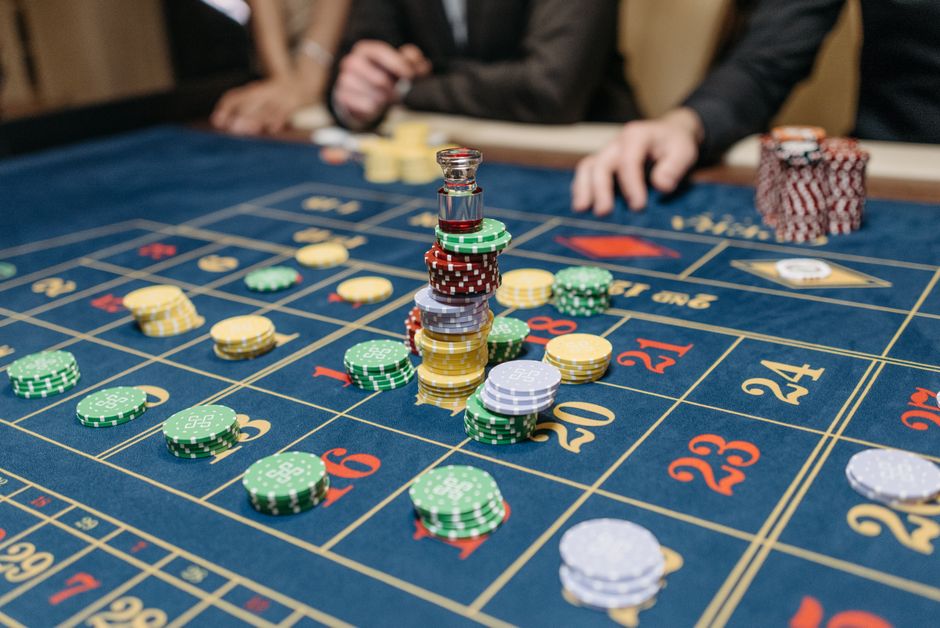
Every game in a casino, online or brick-and-mortar, runs on a mathematical margin called the house edge. It's the difference between the true odds of an outcome and what the operator pays you for it. A coin flip pays even money and carries zero edge. A roulette wheel with two green zeros pays the same 35-to-1 on a single number that a single-zero wheel does — that extra pocket is the edge, and it's worth about 5.26% to the house. On a European single-zero wheel it drops to roughly 2.7%. Same game, nearly half the long-term cost.
This matters because it reframes how you should think about every session. You're not trying to beat the number. You're trying to pick games where the number is low and the variance is survivable. Variance is the short-term noise; house edge is the gravity pulling your bankroll slowly toward zero. Slots might have an edge of 2% to 10% depending on the machine, blackjack with perfect basic strategy sits around 0.5%, and baccarat's banker bet is famously around 1.06%. If you're going to play, at least know which side of the spreadsheet you're standing on.
Slots: Volatility Is Your Real Opponent
Modern online slots rarely talk about house edge. They talk about RTP — return to player — which is basically 100% minus the edge. A slot with 96% RTP gives back 96 cents per dollar wagered over millions of spins. That sounds reasonable until you realize RTP is a theoretical average, not a promise. You can lose 100% of your bankroll on a 96% slot and never once touch the invisible curve.
What players actually feel is volatility. Consider two slots:
- Low volatility: frequent small wins, gradual drain. Good for long sessions and grinding bonuses.
- High volatility: long dry spells punctuated by rare huge hits. Fantastic if you're chasing a jackpot, brutal if your bankroll is thin.
A good rule of thumb: your session bankroll should cover at least 200 to 300 spins at your chosen stake for high-volatility slots. Ten-cent spins on a two-hundred-dollar bankroll gives you a chance. Five-dollar spins on the same bankroll is a coin flip you already lost. Bet sizing is a bigger lever than slot choice, and most people ignore it entirely. Anyone weighing up options should see FUN88.
Reading the Fine Print on Bonuses
Welcome bonuses are not free money — they're marketing with strings. Look at the wagering requirement first. A 100% match up to $200 with a 40x wagering requirement on the bonus means you'd need to wager $8,000 before withdrawing anything. If the eligible games list excludes low-edge options like blackjack, you're essentially locked into slots with 96% RTP, and the math on a 40x bonus can quietly eat most of its value. Bonuses with 50x-plus requirements and game restrictions are usually worth less than the headline suggests.
Betting: Where Skill Actually Meets Market
Sports betting is a different beast because the house book is priced against a market, not a fixed wheel. That means a sharp bettor can actually find positive expected value. The key concept is implied probability. Odds of +150 imply a 40% chance of winning (100 / 250). Odds of -200 imply 66.7% (200 / 300). When you sum the implied probabilities of both sides of a bet, anything above 100% is the vig, also called the juice or margin. A standard point spread carries roughly 4.5% to 5% margin.
Line shopping is the most underrated skill in betting. Getting +150 instead of +140 on the same play doesn't sound like much until you do it a thousand times. Across a year, a single percentage point of extra return can be the difference between a losing and a profitable season. Sharp bettors maintain accounts at multiple books for exactly this reason.
Poker Is Not Gambling in the Traditional Sense
Poker is the one game in the building where the house doesn't beat you — it charges you rent. The rake is a fixed percentage of each pot, usually 5% to 10% with a cap. You're not playing the casino; you're playing the other players and paying the casino a toll per hand. This is why online poker at low stakes is brutal: a $0.05 rake cap on a micro-stakes table might represent 3% of the pot, but against weak opponents the edge barely survives the toll. For practical tips, check out FUN 88.
Cash game strategy and tournament strategy diverge sharply here. In tournaments, the rake is baked into the buy-in, and chip utility changes with stack depth and blind structure. At 20 big blinds with an ante, a solver will shove hands that a cash game player folds instantly. Understanding ICM — the value of surviving versus accumulating chips — is the single biggest edge in tournament play, and most recreational players have never thought about it once.
The Psychology of the House, and How to Beat It
iGaming companies spend real money on behavioral research. Near-misses on slots (two symbols out of three) trigger the same dopamine response as actual wins in imaging studies. Free spin cadences on slot machines are timed to keep you in the zone. Live dealer tables use eye contact and small talk because we socialize faster than we calculate. Betting apps redesign their buttons to reduce time between bets because hesitating is the enemy of action.
You can't out-discipline a system designed by people with graduate degrees in behavioral economics. What you can do is build friction:
- Set deposit limits before you play, not after a losing streak.
- Use session timers — five-minute warnings are standard on regulated sites.
- Never top up a live session. If the plan was $50, the plan was $50.
- Treat bonuses as optional, not as reasons to play.
The players who last aren't the ones with the strongest hunches. They're the ones who arrived with a budget, a game plan, and the discipline to log off when the math said it was time.
The Bottom Line
iGaming isn't rigged in the sense that outcomes are fake — regulated operators use certified RNGs and audited tables. It's rigged in the more honest sense that the math always favors the house, and the marketing always hides the math. That doesn't mean you can't have a great time or even a profitable run in poker or betting. It means you should walk in knowing exactly which edges exist, which ones don't, and how much you're willing to pay for entertainment. Once you know the numbers, the games stop being mysterious and start being what they are: beautifully designed coin flips with a commission. Play accordingly, and the casino stops being a trap and becomes a room you actually know how to leave.