




Every gambler has heard the phrase. The house always wins. It's true in the long run, mathematically undeniable, and yet millions of people log into casinos, poker rooms, and sportsbooks every single day. Why? Because the house edge isn't the whole story. Between that cold equation and your actual experience sits a messy, fascinating world of variance, skill, psychology, and decision-making. If you understand how that world works, you stop being a mark and start being something closer to a competitor.
This isn't a lecture about quitting. It's a look at how the machinery actually functions, where the real edges hide, and what separates players who treat iGaming as entertainment from those who treat it as a slow leak in their bank account.
The House Edge Is Not a Death Sentence
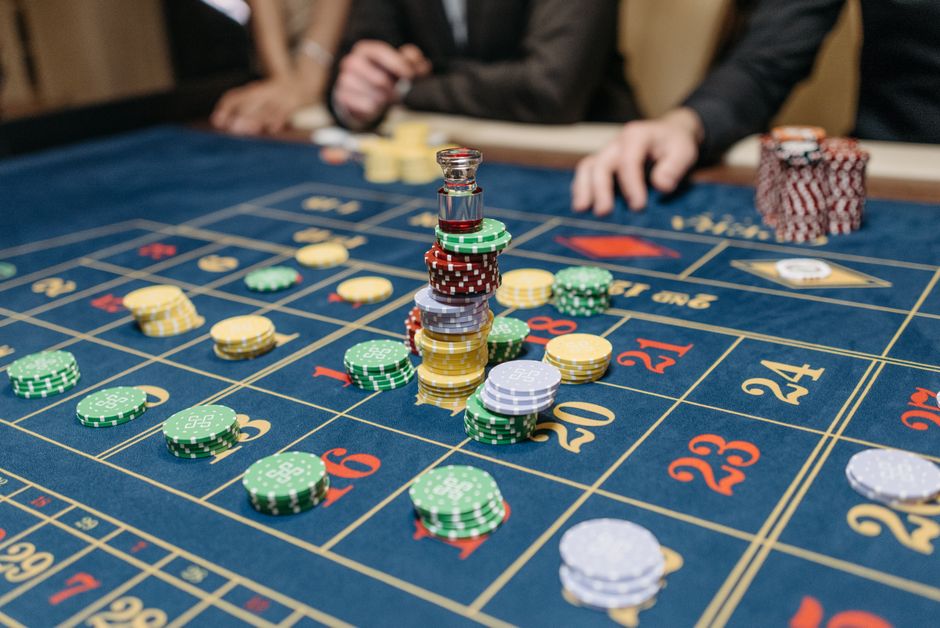
Let's get concrete. A standard American roulette wheel has a house edge of 5.26%. That means for every $100 you wager over a long period, you lose about $5.26 on average. European roulette cuts that to 2.7% because it drops the double zero. Blackjack played with basic strategy sits around 0.5%, and some video poker variants with optimal play dip below that. The gap between 5.26% and 0.5% is the difference between bleeding out and barely noticing the cut.
Here's the part most people miss: the house edge applies to total money wagered, not to your starting bankroll. If you sit down with $200 at a $5 blackjack table and play 200 hands, you're cycling roughly $1,000 through the game. At a 0.5% edge, your expected loss is about $5. At a 5.26% edge, it's $52. Same bankroll, same number of hands, wildly different outcomes. Game selection is not a detail. It's the entire foundation.
Slots: Where Volatility Matters More Than RTP
Slot players obsess over RTP, the return-to-player percentage. A 96% slot returns $96 for every $100 wagered over millions of spins. That number is useful, but incomplete. Two slots with identical RTP can feel completely different depending on volatility.
- Low volatility slots pay small amounts frequently. Think 5x to 20x your stake. Your balance drifts down slowly, and sessions last.
- High volatility slots pay rarely but can hit 1,000x or more. Your balance swings violently, and you might bust before the big hit arrives.
A 96% RTP high-volatility slot might give you a 40% chance of doubling your starting balance before losing it entirely. The same RTP in a low-volatility game might push that to 48%. Neither is a winning proposition long-term, but if you're playing for a shot at a big score, you want the version that occasionally delivers one. If you're playing for time on device, you want the grinder. Knowing which you're buying changes how you should size your bets. A common rule: your bankroll should cover at least 200 to 300 spins on a high-volatility slot, and 100 to 150 on a low-volatility one.
Poker Is the Only Game Where You Can Actually Win
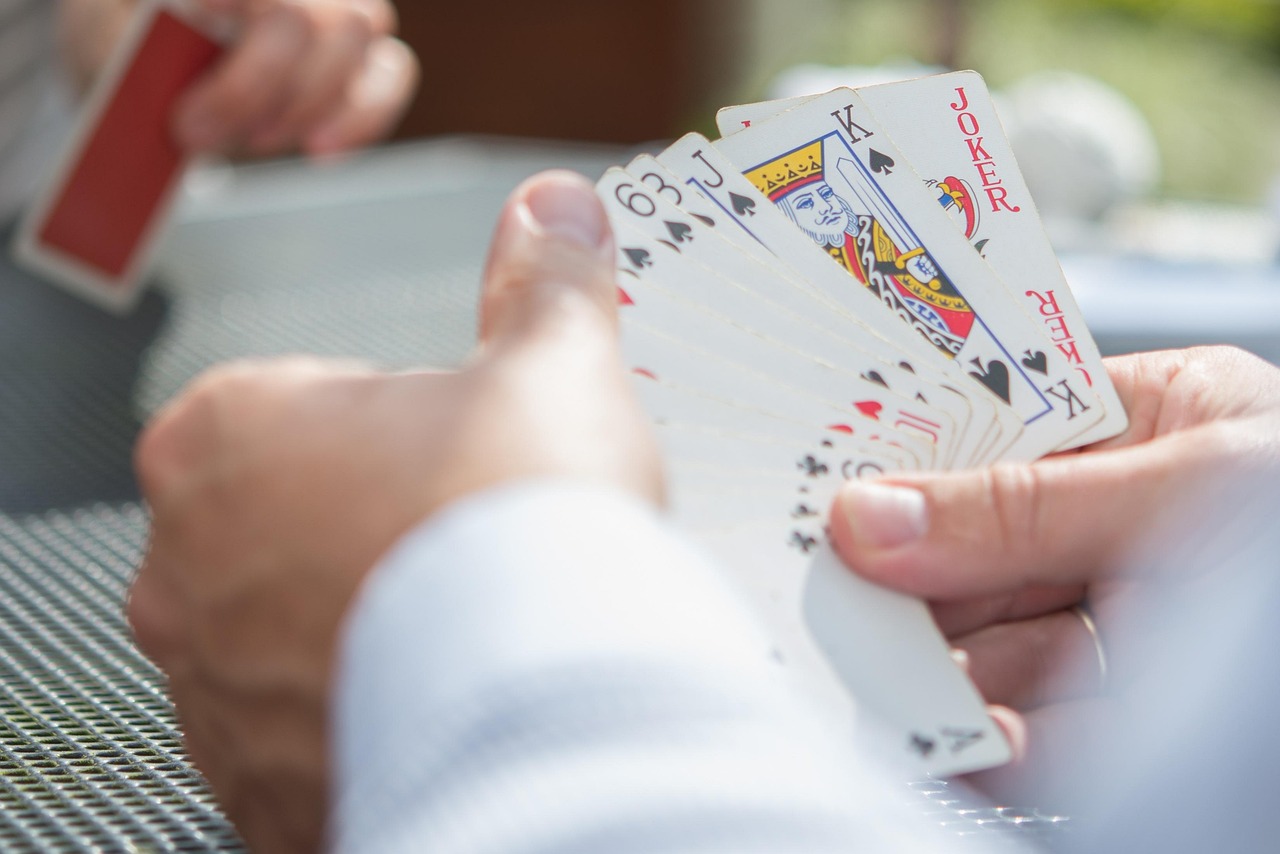
This is not hyperbole. In pure chance games, the math is fixed against you. In poker, you play against other people, and the house takes a rake. If you're better than your opponents by more than the rake, you profit. Full stop. You can read more about it on musang4d.
But here's the catch that trips up almost everyone: you are not playing against the casino. You're playing against a pool of humans with varying skill levels, emotional states, and bankrolls. A $2/$5 no-limit hold'em table with three recreational players and six regulars is a different ecosystem than a $1/$2 table full of tourists. Your win rate depends on table selection as much as card sense.
Concrete example: a solid low-stakes player might win 5 to 10 big blinds per hour in a soft game. At $1/$2, that's $10 to $20 per hour before rake. After a $6 rake and tips, you're looking at $4 to $14. That's real, but modest. Move to a $2/$5 game with the same edge, and you're earning $25 to $50 per hour. The skill gap matters, but so does the stake and the rake structure. Online poker tells a similar story: win rates of 2 to 4 bb/100 hands are achievable for strong players at micro-stakes, but the rake and the presence of tracking software make higher stakes a different beast entirely.
Betting Markets and the Illusion of the Sure Thing
Sports betting has exploded, and with it, a flood of people who think they've found an edge because they watched a few documentaries. The truth is simpler and harsher: bookmakers price markets efficiently. A standard -110 line on a coin-flip bet means you need to win 52.4% of the time just to break even. Most casual bettors hover around 48% to 50%. That's a losing proposition before you even account for parlays and teasers, which carry massive built-in edges.
Where do edges actually exist? In niche markets, injury news before lines adjust, weather impacts on outdoor sports, and line shopping across multiple books. A half-point difference in an NFL spread can flip a bet from -EV to +EV. If you're not comparing odds across at least three books, you're leaving money on the table every single week.
Also worth saying: the psychological trap of betting is that wins feel like skill and losses feel like bad luck. That's not a character flaw. It's how human brains are wired. The bettors who survive are the ones who track every wager, calculate their actual ROI, and adjust. Gut feelings are expensive.
Bankroll Management: The Boring Superpower
No strategy survives contact with a poorly managed bankroll. You can be the best poker player in the room and go broke in a week if you're playing stakes that exceed your roll. Here's a simple framework that works across iGaming:
- Separate your gambling bankroll from your life money. Completely. No exceptions.
- Decide your unit size. In poker, that's 1% to 2% of your roll per buy-in. In slots, it's 0.5% to 1% per spin. In sports betting, 1% to 3% per wager.
- Set a session stop-loss. If you lose 20% of your roll in one session, you're done for the day. This isn't negotiable.
- Set a win-stop too. If you double your session starting amount, cash out half and keep playing with the rest.
- Review weekly. What games did you play? What was your actual return? Adjust.
The players who last aren't the ones with the highest win rate. They're the ones who never put themselves in a position to lose everything in one bad night.
The Long Game Is the Only Game
iGaming is a fascinating ecosystem because it rewards two completely different skill sets. In games of pure chance, the only skill is discipline: choosing low-edge games, managing your bankroll, and walking away. In poker and betting, the skill ceiling is real and high, but the barriers are mental, not mechanical. You have to be honest about your results, ruthless about your bankroll, and patient enough to grind an edge that might only be 2% or 3% per session.
The house always wins in the aggregate. But the aggregate isn't you. You're one player, one session, one decision at a time. The question isn't whether the house has an edge. It's whether you're playing a game where your edge can be bigger.